


Strategy (formerly MicroStrategy) is the most important corporate holder of Bitcoin, owning 671,268 BTC, representing over 3.2% of all Bitcoin in circulation. This makes the corporate a high-risk cornerstone within the Bitcoin ecosystem.
Should it disintegrate, the impact might be greater than the FTX collapse of 2022. Here's why this threat is real, what could trigger it, and the way dire the implications might be.
MicroStrategy is a leveraged Bitcoin bet
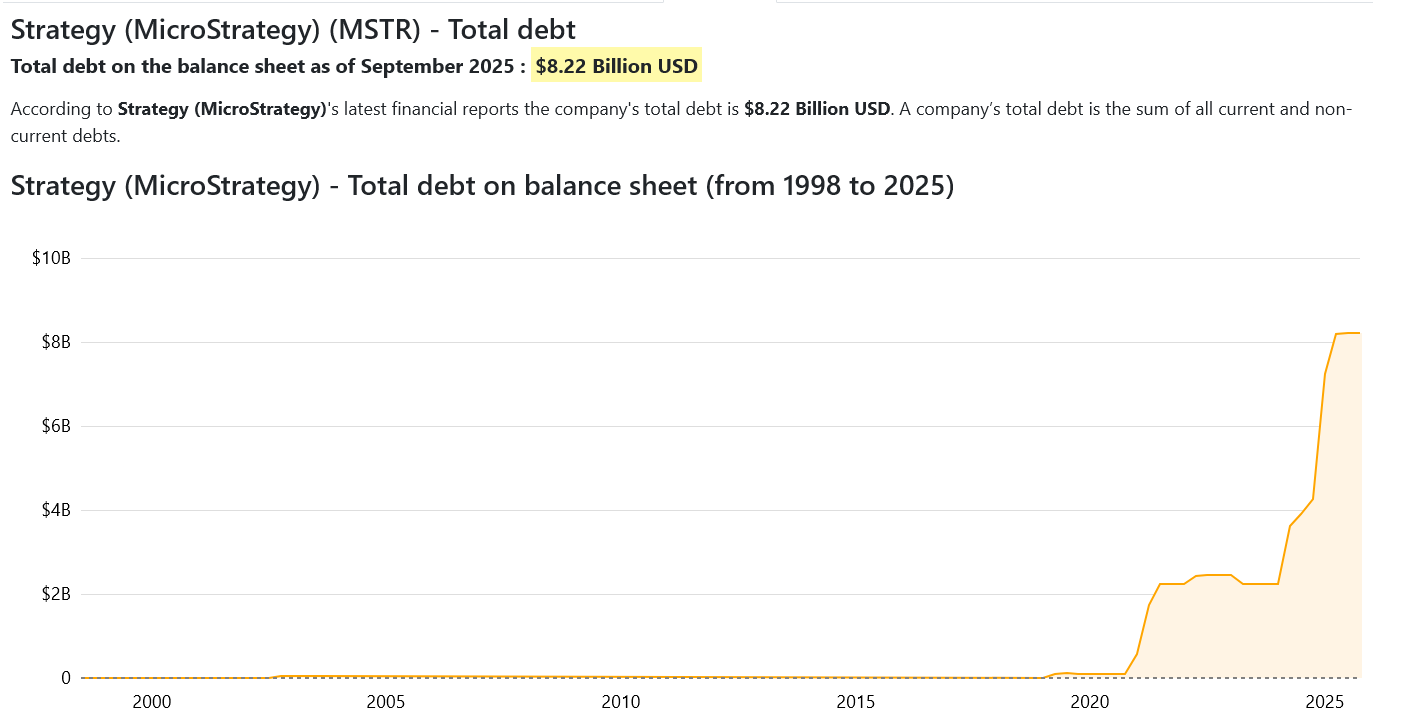
MicroStrategy's entire identity is now tied to Bitcoin. The company spent over $50 billion purchasing BTC, mostly through debt and stock sales. Its software business generates just $460 million a yr, a fraction of its exposure.
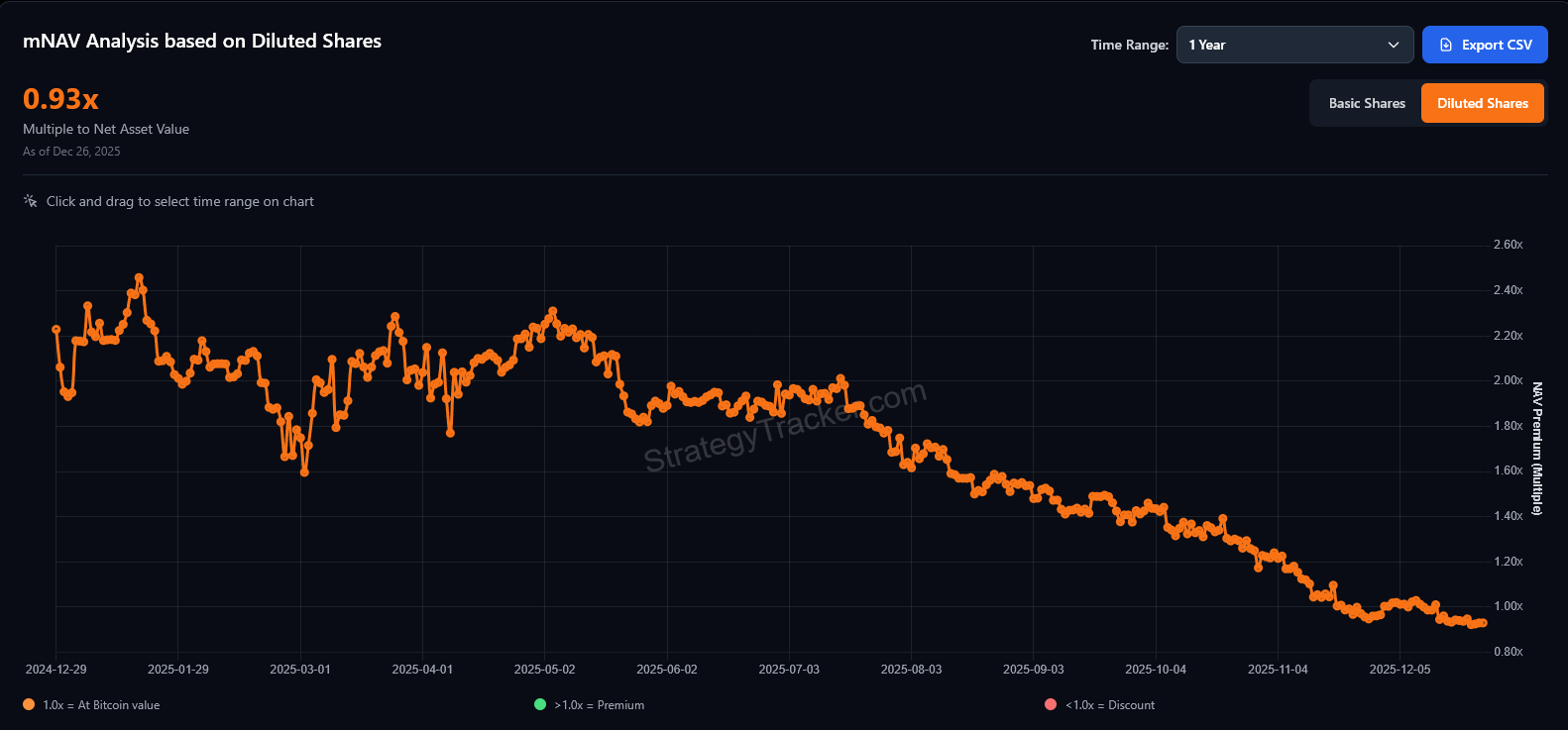
In December 2025, the corporate's shares were trading well below the worth of its Bitcoin holdings. The market cap is around $45 billion, but its BTC is value around $59-60 billion.
MicroStrategy share prices within the second half of 2025. Source: Google Finance
Investors are discounting its assets attributable to concerns about dilution, debt and sustainability.
The average BTC cost basis is around $74,972, and most of its recent purchases have been near Bitcoin's Q4 2025 peak.
More than 95% of its valuation is determined by the worth of Bitcoin.
If BTC falls sharply, the corporate might be trapped – holding billions of dollars in debt and preferred shares with no way out.
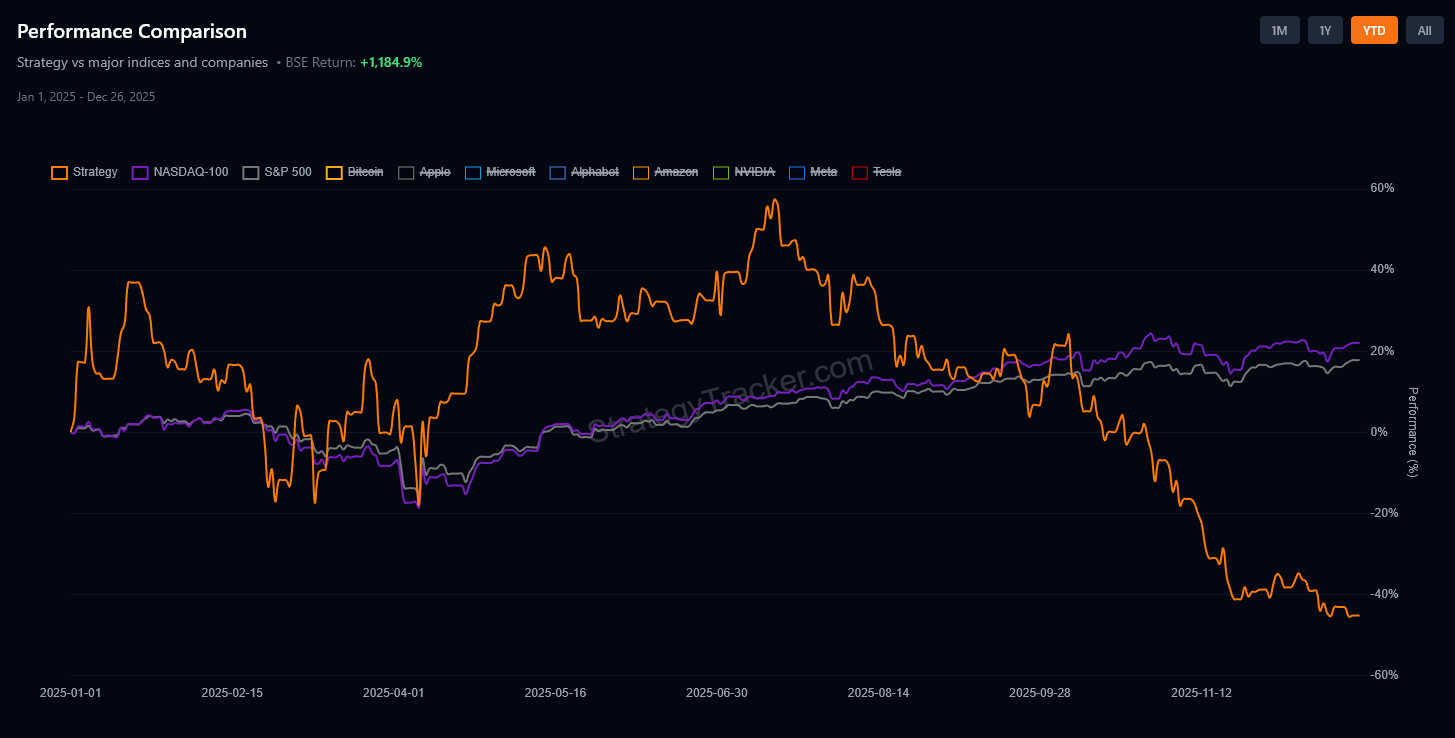
For example, Bitcoin has fallen 20% since October 10, but MSTR's loss has greater than doubled over the identical period.
MSTR stock performance comparison with NASDAQ-100 and S&P 500 in 2025. Source: Saylor Tracker
What makes this a black swan risk?
MicroStrategy used aggressive tactics to finance Bitcoin purchases. It sold common stock and issued latest varieties of preferred stock.
The company now owes over $8.2 billion in convertible notes and has over $7.5 billion in preferred stock. These financial instruments require large money outflows: $779 million per yr in interest and dividends.
If Bitcoin crashes at current levels below $13,000, MicroStrategy could turn out to be insolvent. This isn't likely within the short term, but BTC's history shows that 70-80% drawdowns are common.
A giant crash, especially if accompanied by a liquidity crisis or ETF-related volatility, could put the corporate in distress.
Unlike FTX, MicroStrategy is just not an exchange. But the impact of its failure might be deeper. It owns more Bitcoin than another company except some ETFs and governments.
A forced liquidation or panic over MicroStrategy's collapse could send BTC's price plummeting – making a feedback loop in crypto markets.
MicroStrategy has promised to not sell its BTC, but that is determined by its ability to lift money.
It has reserves of $2.2 billion at the top of 2025. This is sufficient to cover two years of payouts. However, this buffer could disappear if BTC falls and capital markets close.
How likely is Michael Saylor's technique to fail?
Probability is just not binary. But the danger increases.
MicroStrategy's current position is fragile. The stock is down 50% this yr. His mNAV is lower than 0.8×. Institutional investors are switching to Bitcoin ETFs, that are cheaper and fewer complex.
Due to their structure, index funds can lower the MSTR and thus trigger passive outflows value billions.
If Bitcoin falls below $50,000 and stays there, the corporate's market cap could fall below its debt load. At that time, the corporate's ability to lift capital could dry up, forcing painful decisions like selling assets or restructuring.
The likelihood of a whole collapse in 2026 is slim, but not small. A rough estimate could place the probability at 10-20% based on current balance sheet risk, market behavior and Bitcoin volatility.
However, if that happens, the damage could exceed FTX's collapse. FTX was a centralized exchange. MicroStrategy is a serious holder of Bitcoin supply.
If its holdings flood the market, Bitcoin's price and confidence might be hit hard. This would potentially trigger a broader sell-off across the crypto space.
The post Why MicroStrategy's collapse in 2026 might be crypto's next black swan appeared first on BeInCrypto.
Article source: beincrypto.com
The post Why MicroStrategy's collapse in 2026 might be crypto's next black swan appeared first on Crypto Adventure.


