


Write an article about
Today, a number of persons are beginning to keep a part of their savings in stablecoins. But there’s still an easy query many individuals have: how do you truly spend this crypto on on a regular basis things like groceries, subscriptions, or travel?
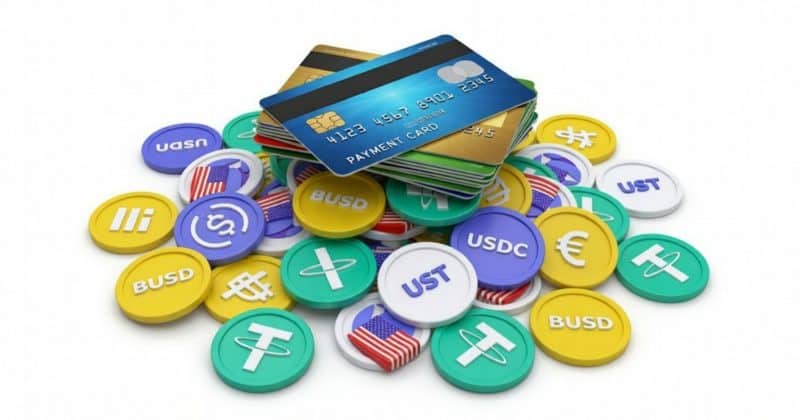
That’s where crypto cards are available. They allow you to spend stablecoins almost the identical way you’ll use a USDT debit card. In this short guide, we’ll show you the way crypto cards work and the way you may start using them yourself.
What are stablecoins and why use them for payments?
Stablecoins are a form of digital currency whose value is tied to a stable asset — typically the US dollar. Thanks to their relatively regular price, they’re widely used each for saving funds and for on a regular basis spending. Many users prefer stablecoins for money transfers and online payments, as transactions are generally faster, include lower fees, and avoid the same old banking bureaucracy.
What is a crypto card and the way it enables you to pay with stablecoins?
A crypto card is a payment card that’s linked to your crypto wallet or platform account and permits you to spend stablecoins just as easily as regular money. When you pay in a store or online, your stablecoins are routinely converted into fiat currency (corresponding to USD or EUR), so the merchant receives the payment in the same old way.
This means you should utilize your digital assets for on a regular basis spending — including shopping, subscriptions, and travel — and even pay through Apple Pay or Google Pay if the cardboard supports it. For the user, the method looks identical to a traditional bank card payment, while all of the technical conversion happens within the background.
How to start out paying with stablecoins using a crypto card?
Today, crypto cards make it possible to spend stablecoins as easily as regular money — in online stores, on a regular basis services, and even offline via Apple Pay or Google Pay. If you’re just getting began, the method often looks like this:
-
Choose a platform that provides a crypto card that supports stablecoins corresponding to USDT or USDC. This may be an exchange or a payment service. Some platforms issue virtual-only cards — for instance, Cryptomus, where the cardboard may be connected to Apple Pay / Google Pay and used for on a regular basis purchases.
-
Register and complete KYC verification.
In most cases, you’ll must confirm your identity, as required by payment networks. -
Issue your card (often virtual at first).
After issuance, you receive the cardboard details identical to with a daily bank card. -
Top up the cardboard with stablecoins — typically USDT or USDC.
Funds are transferred out of your crypto wallet or platform balance. -
Add the cardboard to Apple Pay or Google Pay (if supported).
This permits you to pay using your phone or smartwatch. -
Make purchases identical to with a conventional bank card.
Your stablecoins are routinely converted into fiat, and the merchant receives payment of their local currency. -
Manage the cardboard through the app.
You can often view your balance and transaction history, receive notifications, and freeze or unfreeze the cardboard when needed.
Practical suggestions for beginners
If you’re just beginning to use a crypto card and pay with stablecoins, it’s best to maneuver progressively and concentrate to the small print. This will show you how to avoid unnecessary fees and customary mistakes, especially at first.
-
Start with a small amount. Make one or two small purchases first to grasp how conversion works and what fees apply.
-
Be aware of fees prematurely. Some platforms charge for loading the cardboard, others for spending — each are normal, so long as you understand the structure.
-
Keep most of your funds in your wallet, not on the cardboard. Treat the cardboard like a spending account relatively than long-term storage.
-
Enable notifications. Push alerts show you how to track every transaction and react quickly if something looks suspicious.
-
Use 2FA and freeze/unfreeze options where available. This is a straightforward option to increase account security.
-
Keep an eye fixed on limits. Many cards have every day or monthly caps — it’s normal, just pay attention to them.
Crypto cards that support stablecoins make using digital assets way more practical and closer to traditional banking tools. You can store your money in a stable currency while spending it identical to regular money — online, offline, and while traveling.
At the identical time, each provider has its own terms, fees, and features, so it’s necessary to grasp how the cardboard works and what role it plays in your on a regular basis funds. When used thoughtfully, a crypto card can grow to be a convenient and reliable option to manage on a regular basis payments in a world where cryptocurrency is progressively becoming a part of on a regular basis life.
make it easy to read for teens.Organize the content with appropriate headings and subheadings (h1, h2, h3, h4, h5, h6) and made content unique. Include conclusion section and don’t include the title. it must return only article i dont want any extra information or introductory text with article e.g: ” Here is rewritten article:” or “Here is the rewritten content:”


